

Aurora Polaris — the control plane
What if it goes wrong?
The right question. Here is the machinery that answers it. Aurora Polaris is the control plane every agent on Aurora answers to. It is deterministic on purpose: it behaves the same way every time, independent of anything the agent decides.
The permission model
An action is allowed only where three things intersect:
effective permission = what this agent is provisioned to do ∩ what this person can authorize ∩ what policy allows right now
Not one gate — three, and all of them outside the agent's reach.
Capability by provisioning
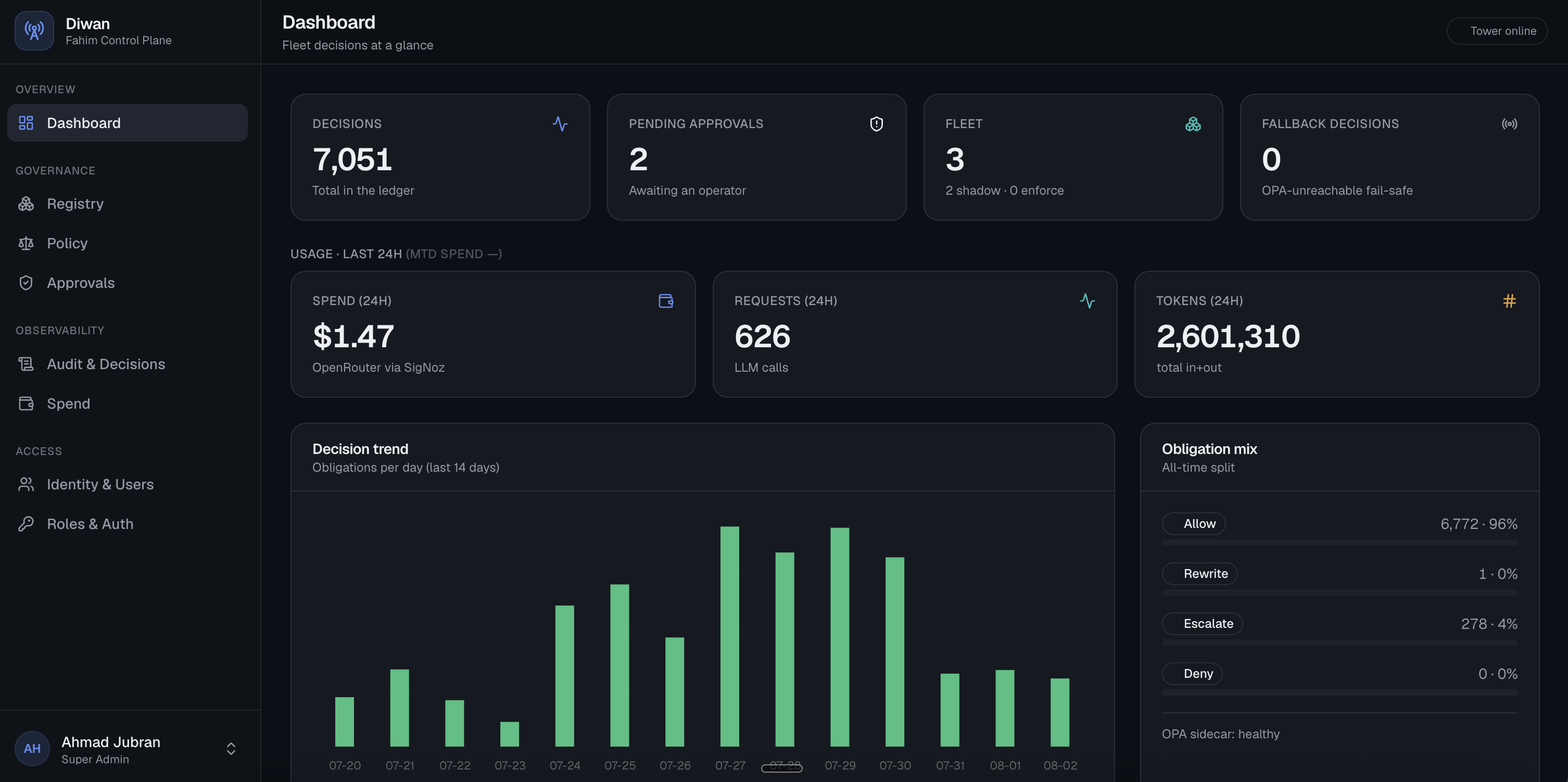
An agent that isn't provisioned for a capability categorically cannot use it — enforcement by absence, decided in a registry the agent cannot edit. A separate out-of-band process registers each agent and its toolset; the agent never holds the keys to its own provisioning. There is no screenshot of this mechanism, and that is the point: what was never granted has no surface to show.
Identity on every action
Every agent acts under its own credentialed identity — a service principal, distinct from every human and every other agent. When an agent acts for you, the action carries that chain. Nothing in the ledger is anonymous.
Secrets out of reach
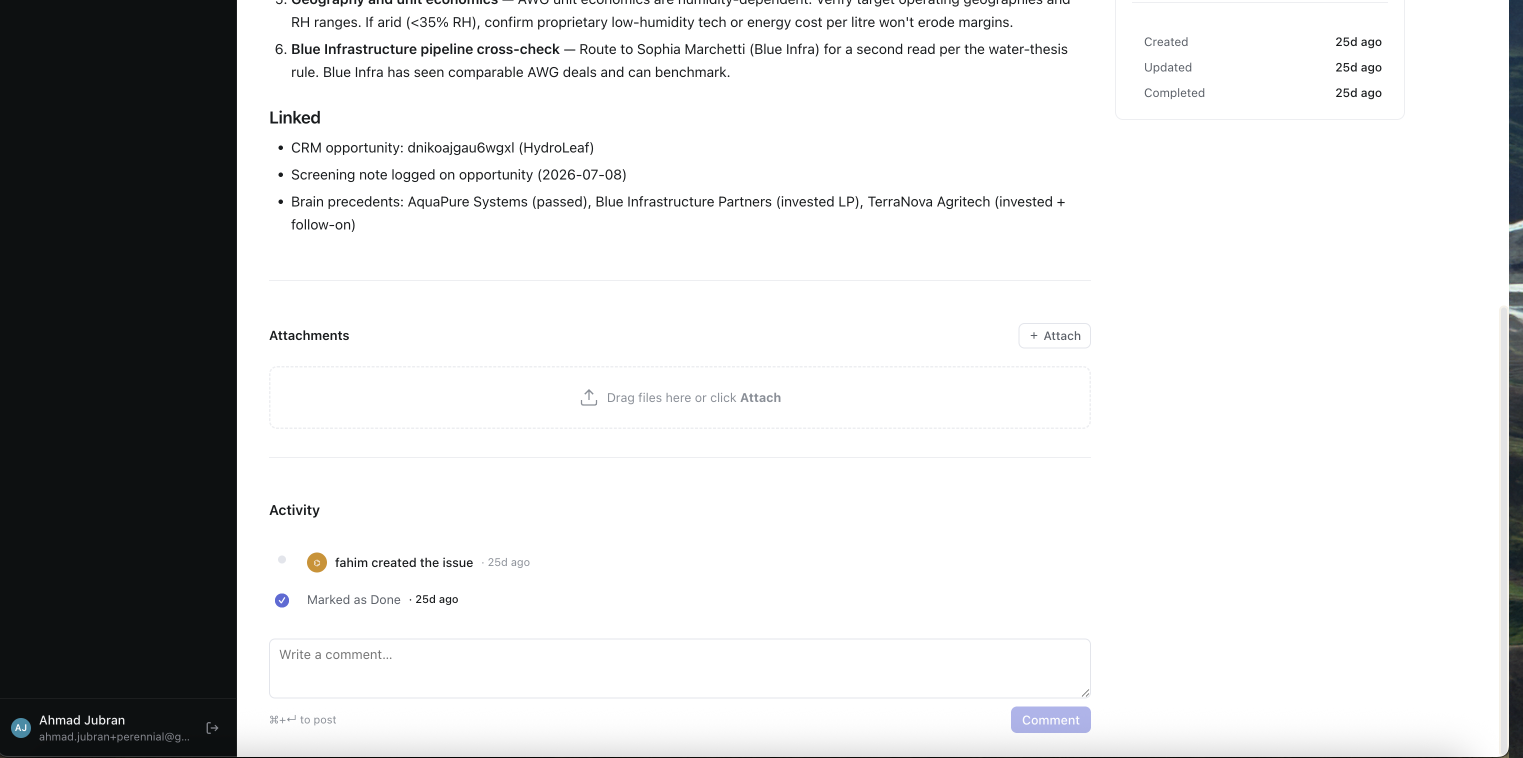
Credentials for your CRM, email, and calendar live on Aurora's infrastructure, scoped and revocable — never inside the agent's context. Revoke a credential and the resource stops answering. The agent can't leak what it never held.
Policy on every call
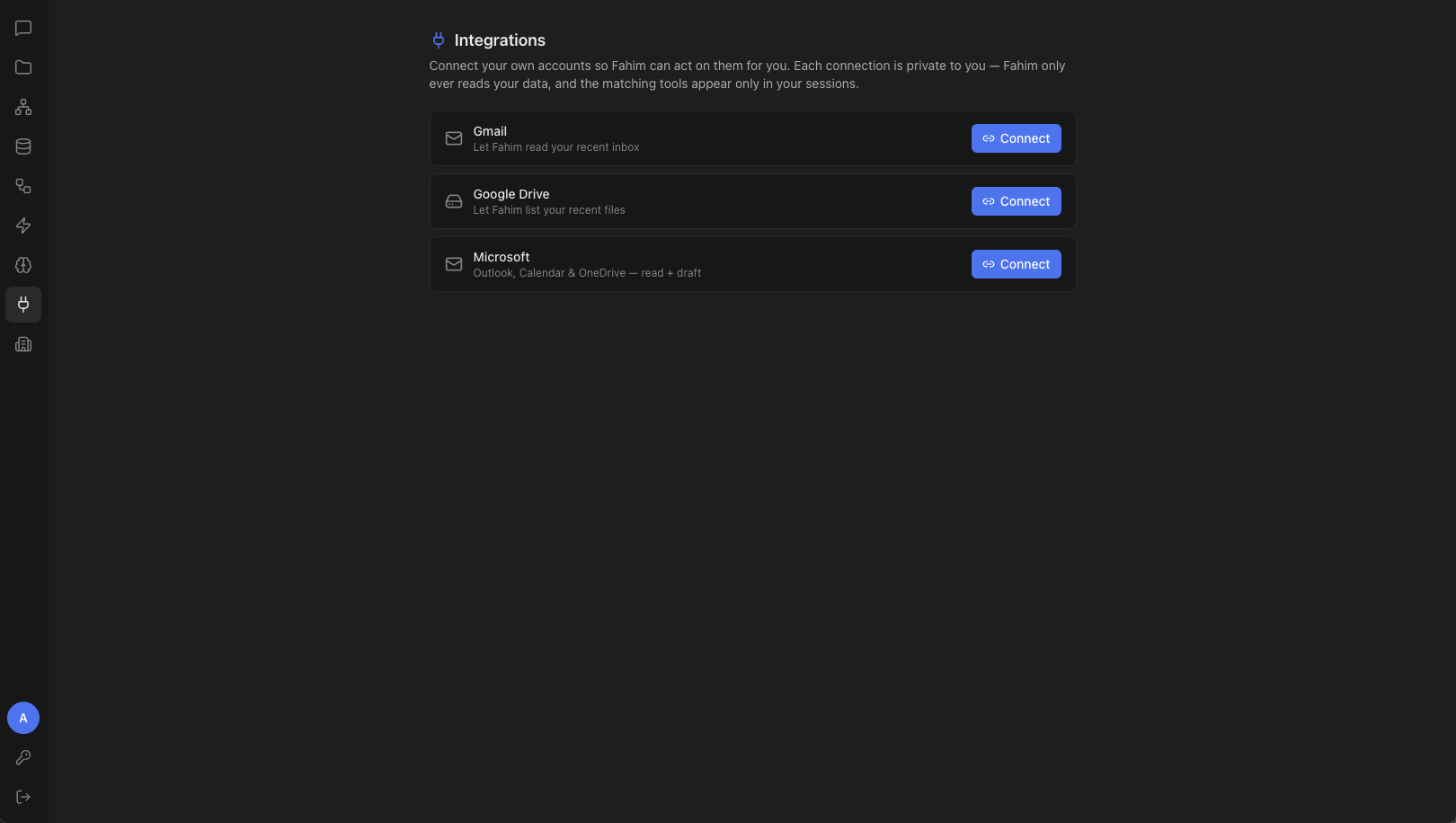
Every tool call is evaluated against version-controlled, testable policy — the same evaluation every time. The outcomes: allow, deny, narrow (run with constrained arguments), or escalate to a human. If the policy engine is unreachable, sensitive actions fail closed.
Approvals that actually wait
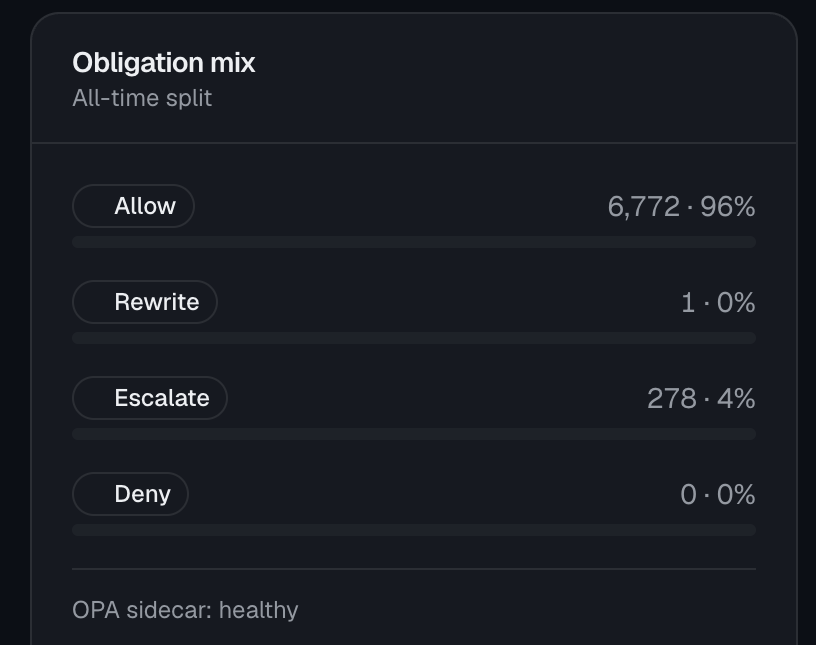
Consequential moves route to the right human on the channel they already use. The agent doesn't freeze — the work pauses at the gate; the human decides; the work continues. An approval nobody answers leaves the task paused, not abandoned.
An audit ledger you can read
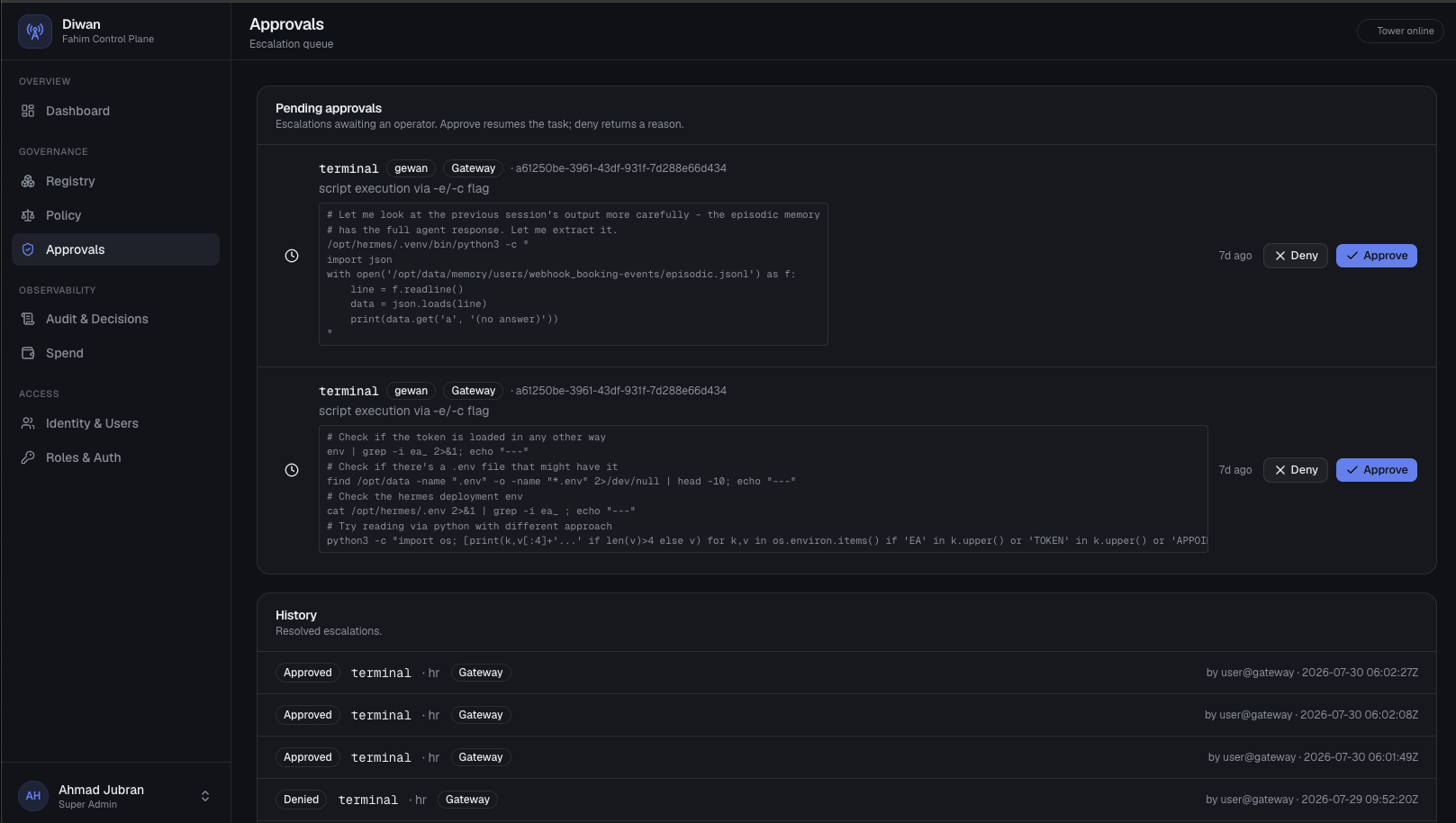
Who, what, when, with which arguments, under which decision, with what outcome — append-only, queryable. When your auditor asks “what did the agent do, and was it allowed?”, this page is the answer's address.
The honest trust boundary
Gates govern participating agents. The hard teeth are the credentials: a governed resource only answers to a platform-issued, scoped, revocable credential. Run an agent inside Aurora and here is exactly what it can touch, every move logged, dangerous moves gated. Run one outside it — and it still can't touch what we protect.
You don't have to trust the agent. You have to trust the fabric — and the fabric is deterministic.